
After-hours cleaning: evenings, nights and weekends
A restaurant cannot be cleaned while it is serving. An office cannot be cleaned properly with forty people working in it. A clinic needs its protocol between patients, not during them. Out-of-hours work is not a premium service — for most commercial sites it is the only way the work gets done properly, and we charge the same rate at eleven at night as at eleven in the morning.
- No night premium, no weekend premium, no holiday premium. Same published rate
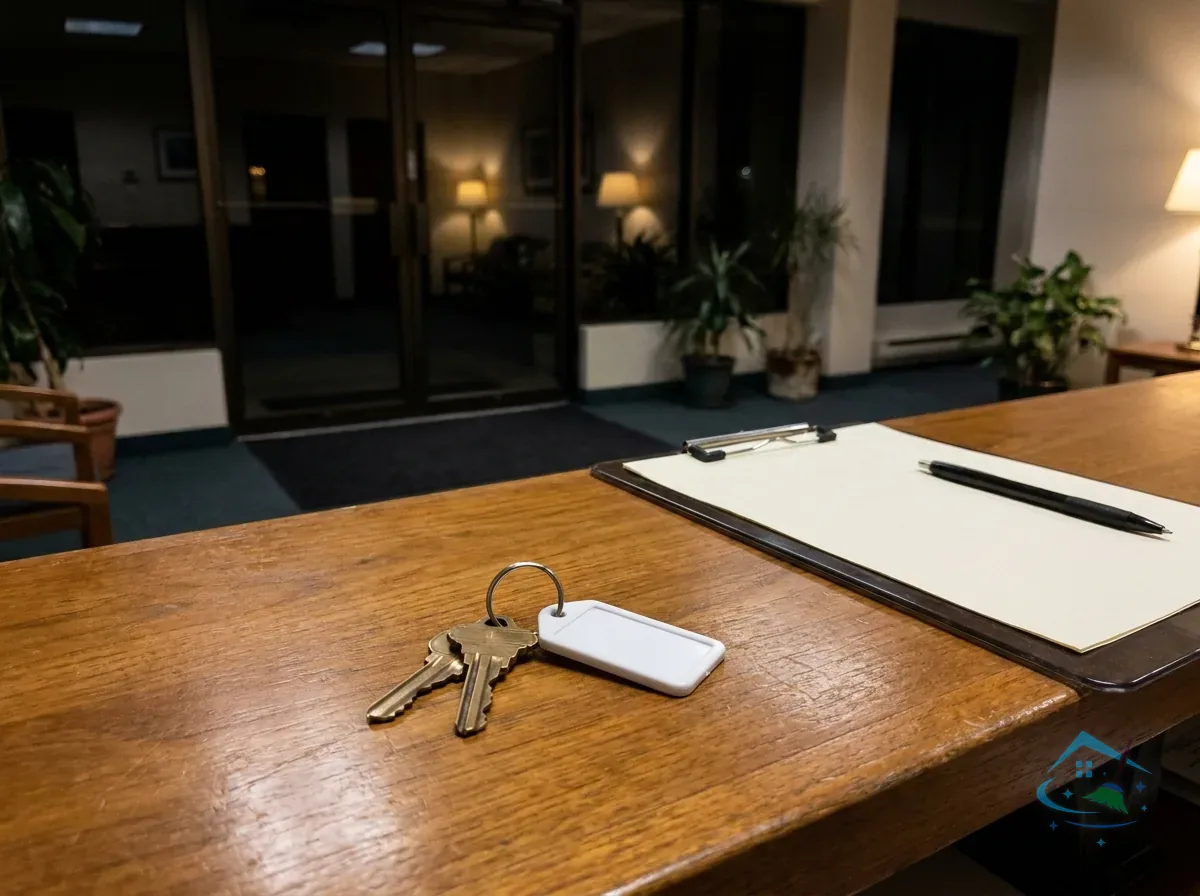
- Keys, alarm codes and fobs handled on paper, with one named person responsible
- Employees on payroll, covered by WorkSafeBC, which is what a building asks for before it lets anyone in at night
It is not about convenience. It is about whether the work is possible
Every commercial site we clean has the same underlying problem: the thing that needs cleaning is the thing being used. Out-of-hours is the only window where that stops being true.
The job can actually be finished
- Floors get done to the edges, because chairs and crates can be moved and left moved
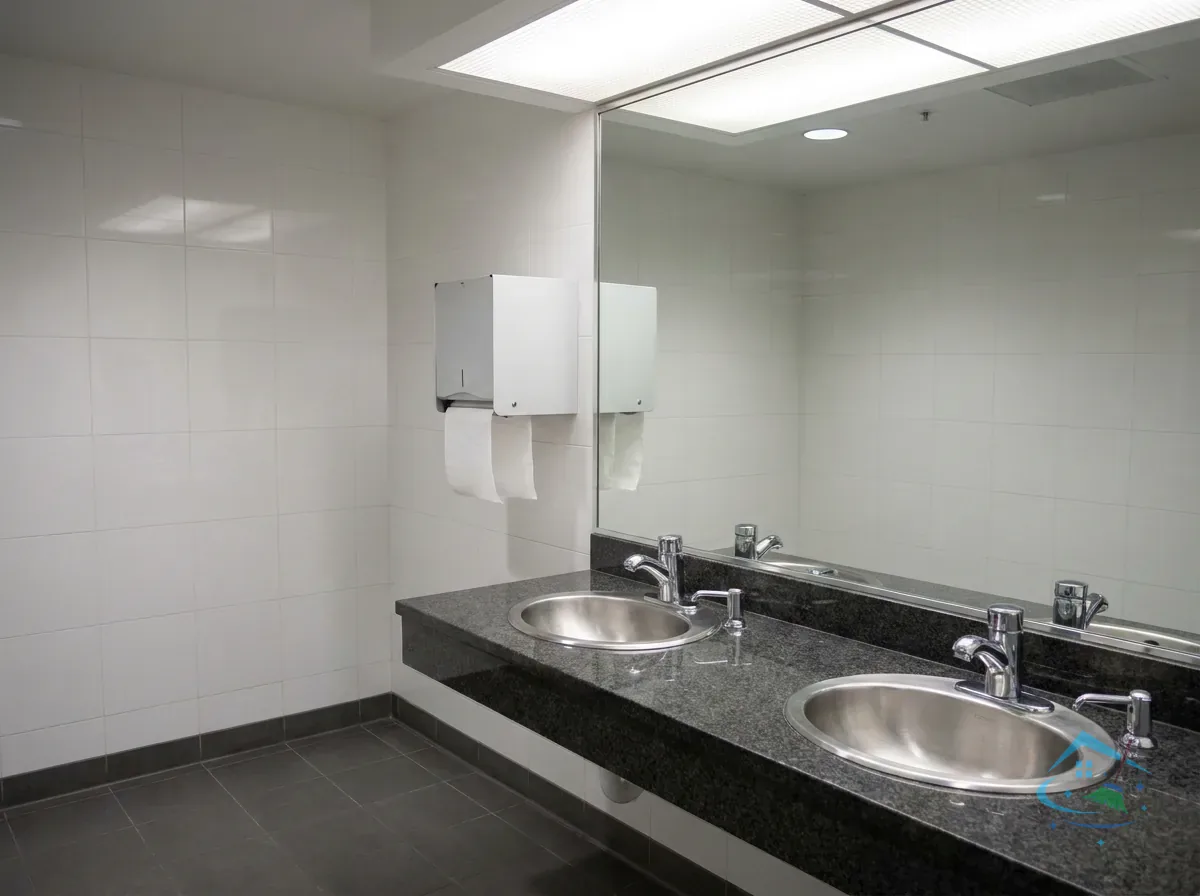
- Washrooms are serviced properly instead of between two people walking in
- Nothing dries while someone walks across it, so floors are safe by opening time
- No vacuum running through a meeting, a service or a consultation
- Your staff arrive to a finished site rather than watching it happen
What it quietly costs you
- The cleaner works around people, so the same hours cover less ground
- Wet floors during opening hours are a slip risk you are carrying, not us
- Desks, tables and kit stay where they are, so the edges never get done
- Customers watch a bin being emptied while they eat, which is its own cost
- The job gets rushed to stay out of the way, and rushed work is what gets noticed
Who holds the keys, and what happens if something goes wrong
Letting a company into an empty building at night is a trust decision, and the honest answer is that it should be handled on paper rather than on goodwill. This is how it is set up before the first visit.
| What you hand over | How it is handled |
|---|---|
| Keys or access fob | Signed for by one named person, not held by the team generally. Returned and signed back if the contract ends |
| Alarm code | Given to the same named person. If your system supports a separate cleaning code, use it — then it is yours to revoke in one step |
| Who locks up | Agreed in writing before the first visit, including what happens if the alarm trips and who the monitoring company calls |
| Certificate of insurance | Sent to your building or property manager before the first visit. Most Vancouver buildings will not let a contractor in at night without one on file |
| WorkSafeBC clearance | Available on request. It is what proves the people in your building at night are covered employees, not someone working uninsured |
| Who is actually coming | The same small team wherever possible. A rotating cast of strangers is the thing that makes night access feel risky, and it is avoidable |
Ask any company for the last two rows before you compare prices. A firm that cannot produce a certificate of insurance and a clearance letter is cheaper for a reason, and the reason lands on you the night something goes wrong in your building.
Why there is no night rate, and how we can afford that
By Geovany M., owner of Clean House Vancouver, cleaning homes and commercial sites in Metro Vancouver since 2011. Written for businesses in Metro Vancouver. Rates and worked examples reviewed 2 November 2026.
Most of the industry charges a premium. We do not
The usual argument for a night surcharge is that evening work is harder to staff. It is true that it is harder to staff with casual labour, which is where the surcharge really comes from. We staff commercial work with employees on payroll who are scheduled for those hours as their shift, not persuaded into them at the last minute.
That is the whole mechanism, and it is worth being plain about it because it is the difference between a rate you can plan around and a rate that moves. There is no night premium, no weekend premium, no holiday premium and no call-out fee. Commercial work is quoted per site after a walkthrough, and the figure holds.
What a walkthrough is actually for. Not to inspect you. To count the things that decide hours: how many washrooms, how much hard floor against carpet, whether the bins go to a chute or out to a lane, whether there is a lift to share with residents, and what time the building actually locks. A quote given without seeing those is a guess that gets corrected later, on your invoice.
The window is narrower than people think
Out of hours does not mean any hour. Most commercial sites in Metro Vancouver have a real window and it is usually shorter than the client assumes: a restaurant that closes at eleven is not empty at eleven, it is empty at half past midnight once the kitchen is shut down. An office with a building lock-off at ten gives you a genuine window from six to ten and nothing after.
That matters for the quote, because the work has to fit in the window with the team you have. Two cleaners for three hours is six billable hours and finishes inside the window. One cleaner for six hours does not, if the window is four. It is the same six billable hours and the same money — the arrangement is what changes.
What we do not take on
There is work adjacent to this that we turn down, and it is more useful to say so than to find out on the night. We do not do kitchen exhaust hood and duct cleaning, which in BC is specialist fire-code work with its own certification. We do not do biohazard or crime-scene remediation. We do not do post-construction debris removal, though we do the final clean once the debris is gone. And we do not do exterior pressure washing or high-level window work from a swing stage.
Everything else that an office, a restaurant dining room, a clinic, a studio, a salon or a small retail unit needs at the end of its day, we do.
Four kinds of building, four different nights
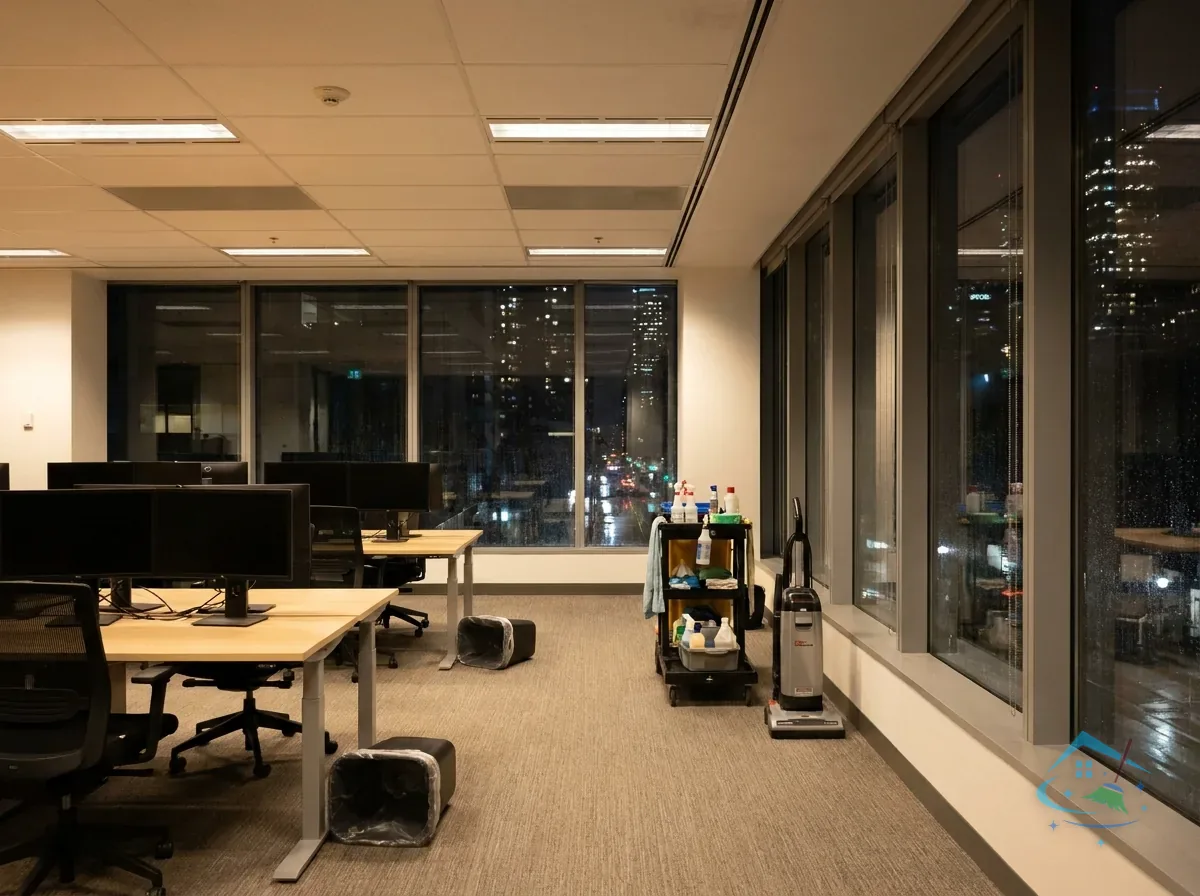
Desks, washrooms, kitchen
The three things staff judge the whole contract on are the washrooms, the kitchen sink and whether the bins were actually emptied. Everything else is noticed less than people think. Nightly or a set number of nights a week, with a deeper floor treatment on a cycle.
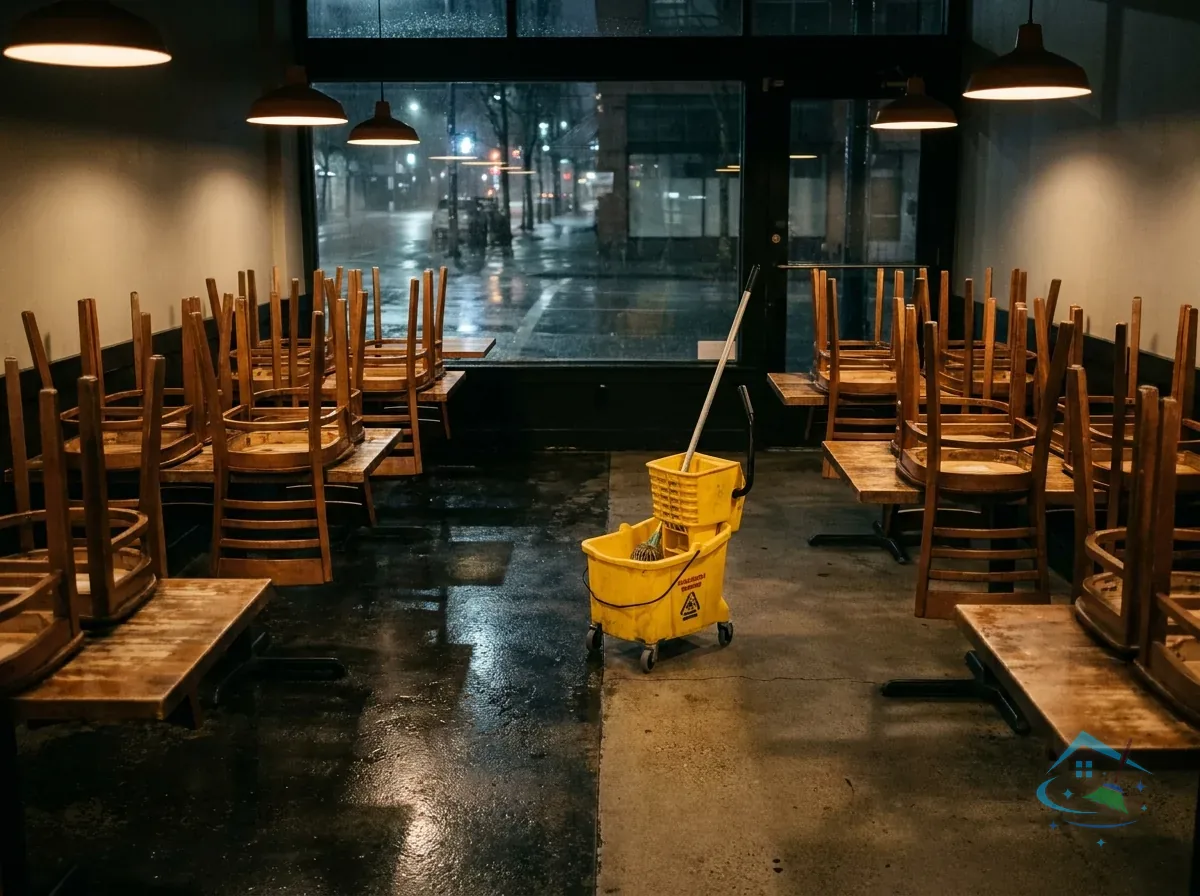
Front of house, after shutdown
Dining room, washrooms and the customer-facing floor to the edges, with chairs up and down again. The kitchen line is usually your own team’s closing routine, and we work around whatever split you already have rather than imposing one.
Between-day reset, with protocol
Surfaces that get touched by every client, floors, washrooms and the treatment or changing areas, done to a fixed written scope so it is the same every night. Disinfection is the part worth agreeing precisely in writing, because “clean” and “disinfected” are not the same claim.
Overnight, open by morning
Floors, glass, fitting rooms and washrooms overnight so the unit opens finished. For venues and late-night rooms the window is genuinely nocturnal, and that is the clearest case where a company without night staff has to charge extra and we do not.
Pick your slot, get your fixed quote
Four steps, a real time slot and a written total — usually the same day.
After-hours cleaning: your questions
Do you charge more for cleaning at night or on weekends?
No. There is no night premium, no weekend premium, no holiday premium and no call-out fee. The rate is the same at eleven at night as at eleven in the morning. We can do that because commercial work is staffed by employees on payroll scheduled for those hours as their shift, rather than casual labour persuaded into an awkward slot, and a night surcharge is mostly what that persuasion costs.
What hours can you clean a commercial site in Vancouver?
Evenings, overnight and weekends, Monday to Saturday. The practical window is set by your building rather than by us: an office with a ten o'clock lock-off gives a real window from six to ten, and a restaurant that closes at eleven is usually not empty until half past midnight. We work the window out at the walkthrough, because it decides how many cleaners are needed to finish inside it.
How do you handle keys and alarm codes?
On paper, not on goodwill. Keys or fobs are signed for by one named person rather than held by the team generally, and signed back if the contract ends. Alarm codes go to that same person, and if your system supports a separate cleaning code we ask you to use it, because then revoking access is one step on your side. Who locks up and what happens if the alarm trips is agreed in writing before the first visit.
Are you insured to work in a building after hours?
Yes, and we send the certificate of insurance to your building or property manager before the first visit, because most Vancouver buildings will not admit a contractor at night without one on file. Our cleaners are employees covered by WorkSafeBC rather than subcontractors, and a clearance letter is available on request. Those two documents are what a property manager is actually asking for when they say they need "paperwork".
How much does commercial cleaning cost per night?
Commercial work is quoted per site after a walkthrough rather than from a price list, because the hours depend on things a phone call cannot establish: how many washrooms, how much hard floor against carpet, where the bins go, and how long the building actually stays open to you. The arithmetic is the same as everywhere else on this site, rate times cleaners times hours, and the figure we put in writing is the one that holds.
Will it be the same cleaners every time?
Wherever the schedule allows, yes, and we treat it as part of the service rather than a nicety. A rotating cast of strangers is the single thing that makes night access feel risky to a business owner, and it is also why standards drift: someone who cleans the same site every week knows which door sticks and which floor marks. If a regular is away, you are told who is coming instead.
Is there any commercial work you do not take on?
Yes, and it is more useful to say so up front. We do not do kitchen exhaust hood and duct cleaning, which is specialist fire-code work with its own certification in British Columbia. We do not do biohazard or crime-scene remediation, construction debris removal, or exterior pressure washing and high-level window work from a swing stage. We do the final clean once construction debris is gone, and everything an office, dining room, clinic, salon or small retail unit needs at the end of its day.
Tell us when your building actually empties
We walk the site, count what decides the hours, and put the scope and the figure in writing. No night premium on any of it.
Or call (604) 754-8039 — we answer the same day.