
Employees or contractors: who answers if it goes wrong in your home
Here is the part almost nobody is told. In British Columbia, if you hire a housekeeper directly for eight hours a week or more, WorkSafeBC treats you as the employer, and you are the one who has to register. Hire a cleaning business instead and you are a customer — but only if that business really is registered, which takes five minutes to check and nobody checks.
- The eight-hour line, straight from WorkSafeBC's own guidance
- A clearance letter is free, takes minutes, and is the only proof that counts
- Why a $25 hourly quote is usually missing something specific
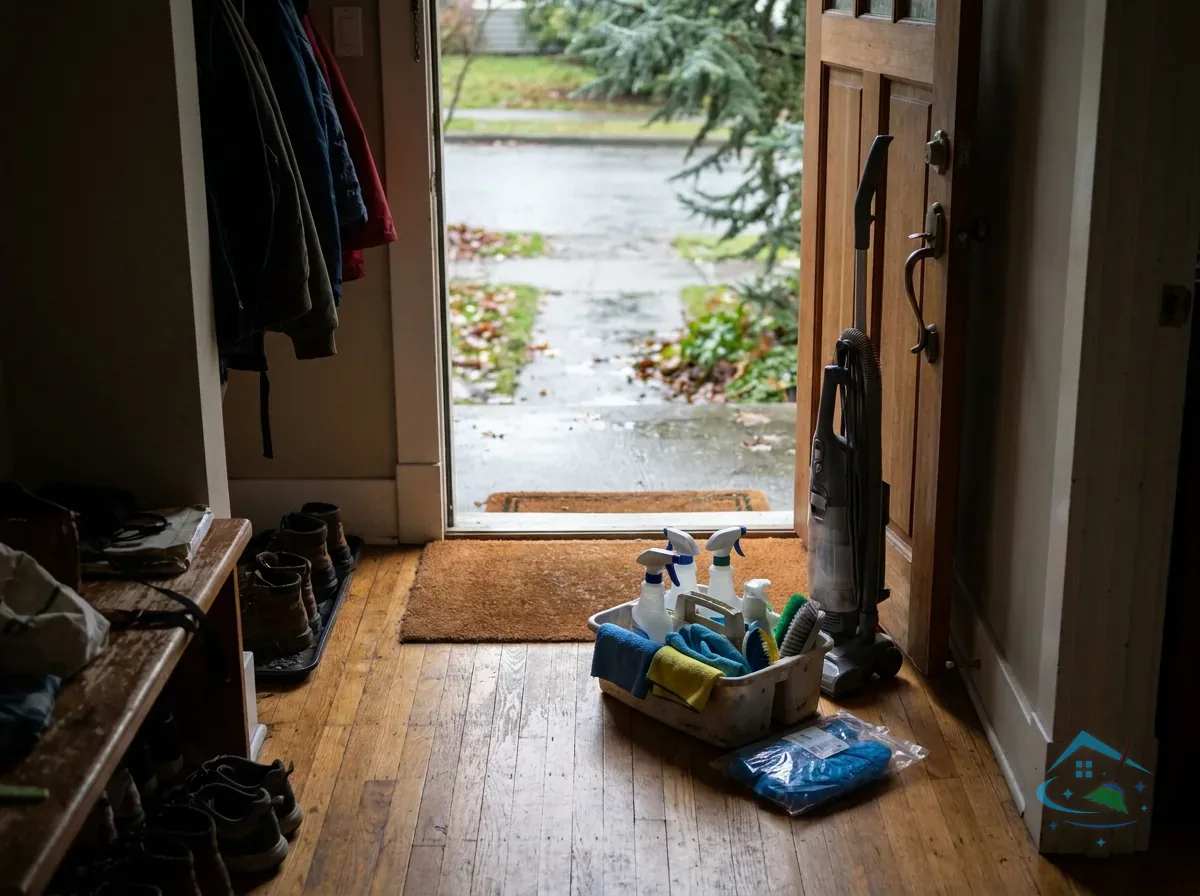
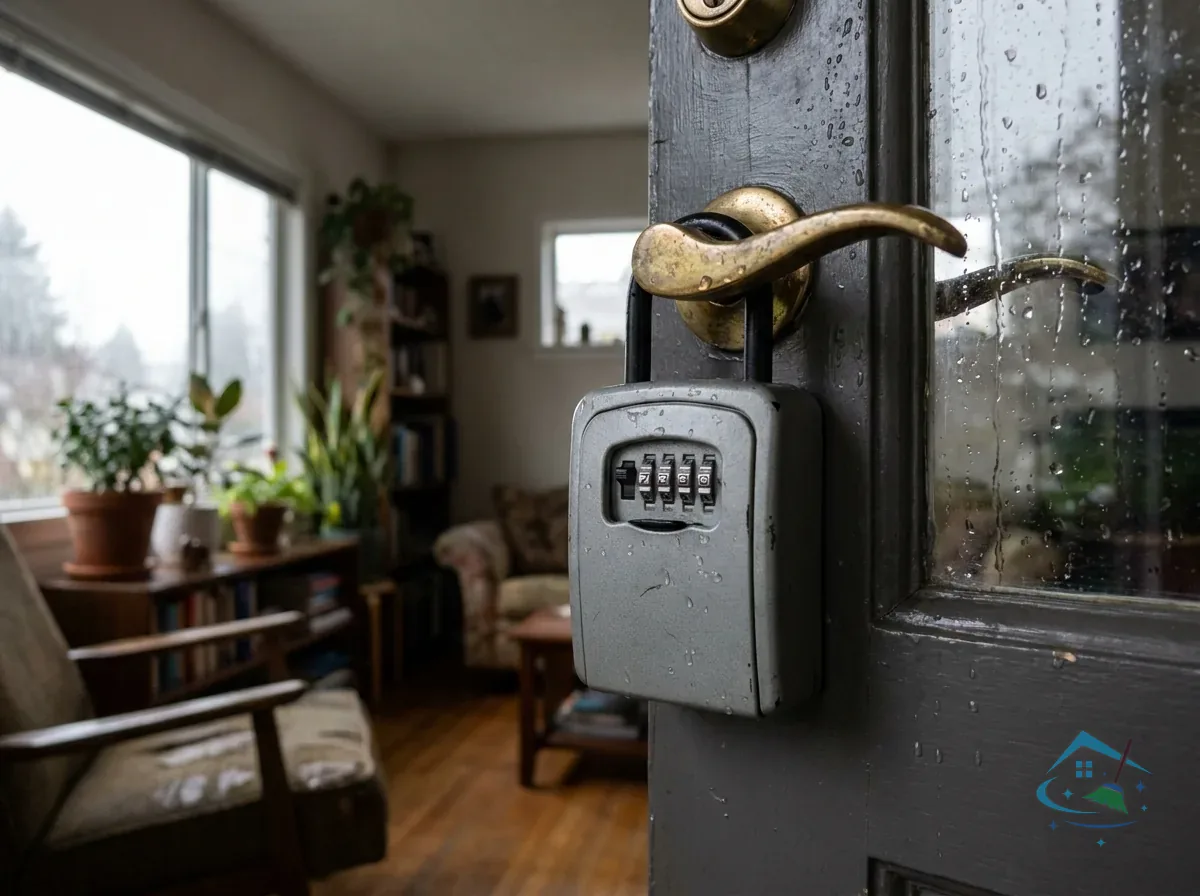
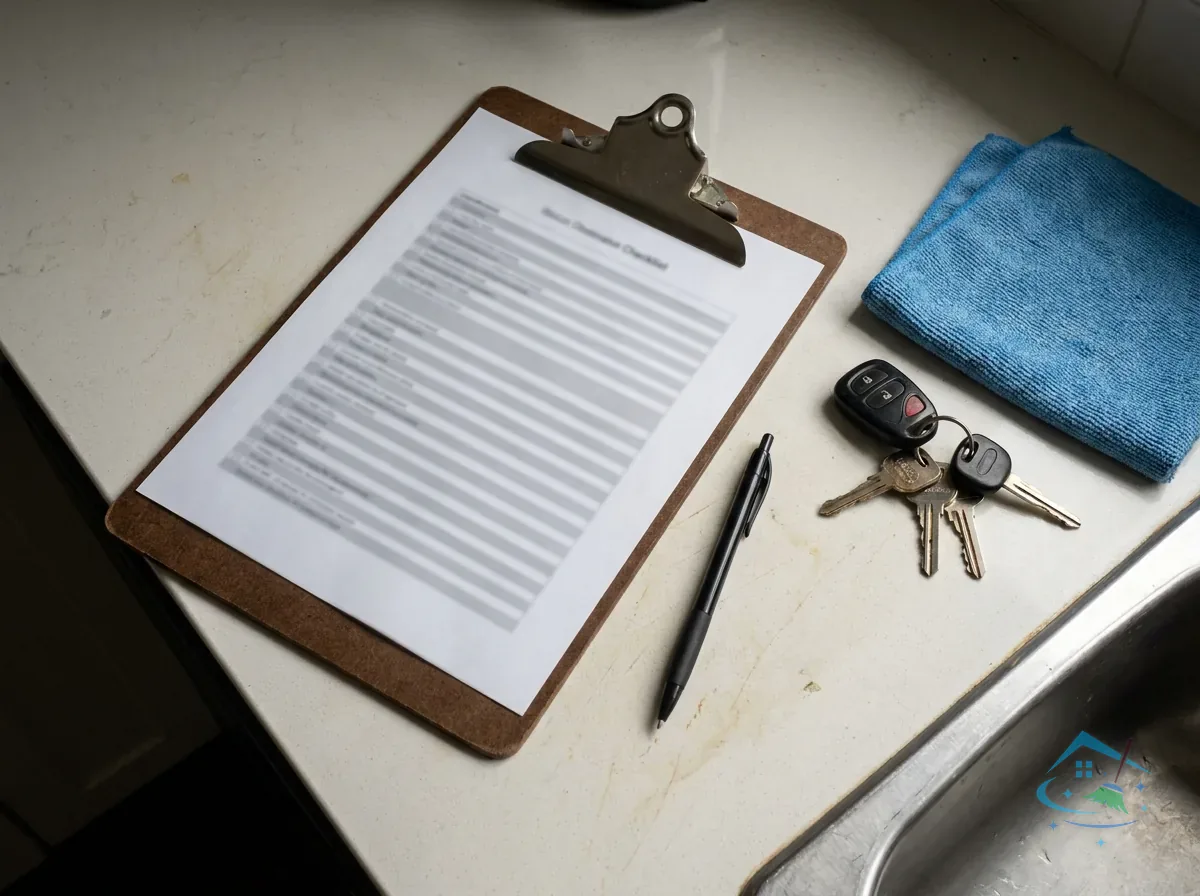
Three ways to hire a cleaner, three different positions
This is the bit that surprises people. Which column you are in has nothing to do with how much you pay and everything to do with who you paid.
required
register
to do
The third row has a condition hidden in it. WorkSafeBC's own guidance says that if you hire a business that is not registered and not paying its premiums, you could be held responsible for those premiums. So the third row is only the easy one once you have checked. That is what the next section is for.
How to verify a cleaning company for yourself
You do not have to take anyone's word for any of this, including ours. All of it is checkable, and three of the four checks are free.
WorkSafeBC issues these free, online. A clearance letter confirms that a business is registered and paying its premiums — which is exactly the thing that protects you. Ask for one addressed to you rather than a screenshot or an email saying “we are covered”, because only the letter is verifiable.
WorkSafeBC is explicit about this: a clearance letter does not rate a company's health and safety record and does not endorse the quality of its work. It answers one question — are the premiums paid — and that is a financial question, not a quality one. Anyone presenting it as a seal of approval is overselling it.
A certificate of liability insurance will name the insured business. Check that the name on it is the name of the company you are hiring, not a related business or an individual. Building managers in Vancouver ask for this routinely before letting a contractor into a strata, so a company that serves condos will have it to hand.
“Our cleaners are employees on payroll” is a short sentence. If the answer arrives long, with words like partners, self-employed professionals or vetted independents, the answer is contractors. That is not automatically wrong, but it changes who is responsible, so you should know.
Someone falls on your stairs. What happens next
Not a hypothetical we invented to sell something — stairs, wet floors and ladders are the ordinary hazards of this work. What differs is who deals with the consequences.
It is handled above your head
- The cleaner is covered through their employer's WorkSafeBC account
- Wage loss and treatment go through that system, not through you
- Damage to your home goes to the company's liability insurer
- You are a customer. Your involvement is a phone call
- A replacement cleaner arrives, because there is a team behind the person
It can land on you
- There may be no workers' compensation coverage behind the person at all
- If you hired direct above the eight-hour line, you were the employer
- If you hired an unregistered business, you may be liable for its premiums
- Damage claims go to your home insurance, with your deductible and your record
- Nobody covers the visit, because there was no team, only a person
We are not saying every independent cleaner is a risk. Plenty are excellent, properly registered, and cheaper than us for good reasons. We are saying that the difference is invisible until something happens, and that it is checkable beforehand in about five minutes.
Why the cheap hourly rate is cheap
By Geovany M., owner of Clean House Vancouver, cleaning homes in Metro Vancouver since 2011. Written for homes in Metro Vancouver. The WorkSafeBC thresholds and the clearance letter description come from WorkSafeBC's own published guidance, checked on 15 October 2026. None of this is legal advice — it is the set of questions to ask, and where to verify the answers.
Work out what has to come out of an hourly rate before anyone earns anything
A quote of $25 an hour is not dishonest and it is not necessarily bad work. It is arithmetic, and the arithmetic is worth doing once.
Out of every hour a cleaning company bills, it has to pay the cleaner a wage that works in Vancouver, plus WorkSafeBC premiums, plus employer payroll contributions, plus liability insurance, plus products and equipment, plus the vehicle and the fuel to get to your door, plus the unpaid time spent quoting, scheduling and answering messages. Then there is whatever is left.
At $32 that works, without a large margin. At $25 something in that list is not being paid, and the two things that get dropped first are the two you cannot see: the workers' compensation premium and the insurance. That is not cynicism. It is the only place the money can come from.
The question is not “why are they cheaper”. It is “which line did they take out”. If the answer is the vehicle, or the office, or the margin, that is their business and you may be getting a bargain. If the answer is the coverage, the saving is real and it is being carried by the person cleaning your home, and in some circumstances by you.
“Insured” and “covered” are not the same word
These get used interchangeably in advertising and they protect against completely different things. Liability insurance covers damage the company does to your property — a scratched floor, a broken fixture, water where it should not be. Workers' compensation through WorkSafeBC covers the person doing the work if they are injured while doing it.
A company can have one and not the other, and the advertising will say “insured” either way. So ask about both by name, and ask for proof of both: the liability certificate, and the clearance letter. Two documents, both free to the company to produce, both something any established business can send you the same day. The full list of seven questions covers the rest of it.
The strata problem, which is where this becomes concrete
If you live in a condo in Vancouver, there is a good chance your building already requires this and you have never noticed. Many strata councils and property managers will not let a contractor past the front desk without a current certificate of liability insurance on file, and some ask for the WorkSafeBC clearance as well.
That requirement exists because the building has been burned before. It is also a useful shortcut for you: a cleaning company that regularly works in Vancouver stratas will have both documents ready, because it has been asked a hundred times. A company that goes quiet when asked has probably never been asked, which tells you where it usually works.
What subcontracting actually changes, in practice rather than in principle
Set the liability question aside for a moment, because there is a second effect that shows up much sooner and matters to most people more.
A company that subcontracts each job to whoever is available sends you a different person most visits. That person has to relearn your home every time: which floor cannot take water, where the spare bin liners live, that the cat must not get onto the balcony, that the baby sleeps until two. A recurring clean only gets better over time if the same people keep coming back, and that only happens when they are employed rather than booked.
That is the honest reason we are set up the way we are, and it costs us more. Our cleaners are on payroll and on proper wages rather than hired for the day, which is also why we can promise the same team on a recurring plan rather than a different stranger each fortnight. Ask us for the clearance letter and the liability certificate before the first visit — we would rather you checked us than took our word for it.
In one line. Ask two questions and request two documents: are your cleaners employees or contractors, are you registered with WorkSafeBC, and may I see the clearance letter and the liability certificate. Any company that can answer all four in one message is a company that has nothing to hide, and that is most of what you are trying to find out.
Ask us for the paperwork with the quote
Four steps, a real time slot and a written total — usually the same day.
Liability and coverage: your questions
Am I liable if a cleaner is injured in my home in BC?
It depends entirely on how you hired them. If you hire a housekeeper directly for eight hours a week or more, WorkSafeBC treats you as a residential employer and you are the one who must register for coverage. Under eight hours a week, registration is not required, though voluntary coverage can be bought. If you hire an independent cleaning business you are a customer rather than an employer and the business carries its own coverage — but WorkSafeBC's guidance also says you could be held responsible for its premiums if that business is not registered and paying. None of this is legal advice; it is why the clearance letter matters.
What is a WorkSafeBC clearance letter and how do I get one?
It is a letter issued by WorkSafeBC confirming that a business is registered and up to date on its premiums. They are free and can be requested online. Ask for one addressed to you rather than a screenshot or an email saying the company is covered, because only the letter itself is verifiable. WorkSafeBC is also explicit that a clearance letter does not rate a company's safety record or endorse the quality of its work — it answers a financial question, not a quality one.
Are your cleaners employees or subcontractors?
Employees, on payroll and on proper wages. Nobody is subcontracted for the day. It costs more than the alternative and it is the reason the same team can keep returning to your home rather than a different person each visit. Ask us for our clearance letter and our liability certificate before the first booking — we would rather you verified it than took our word for it.
What is the difference between liability insurance and workers' compensation?
They protect against completely different things, and advertising says “insured” for both. Liability insurance covers damage the company causes to your property — a scratched floor, a broken fixture, water where it should not be. Workers' compensation through WorkSafeBC covers the person doing the work if they are hurt while doing it. A company can have one without the other, so ask about both by name and ask for proof of both.
Why is one cleaning company so much cheaper per hour?
Because something has come out of the hour. Out of every billed hour a company pays a wage, WorkSafeBC premiums, payroll contributions, liability insurance, products, equipment, the vehicle and the unpaid time spent quoting and scheduling. At $32 that works without a large margin. At $25 a line has been removed, and the two removed first are the ones you cannot see. The useful question is not why they are cheaper but which line they took out.
Does my strata or building manager need to see these documents?
Often yes. Many strata councils and property managers in Vancouver will not let a contractor past the front desk without a current certificate of liability insurance on file, and some ask for the WorkSafeBC clearance too. We provide both on request, addressed to your building if that is what they need. A company that goes quiet when asked for them has probably never been asked, which tells you something about where it usually works.
How do I know the insurance certificate is real?
Read the named insured. The business named on the certificate should be exactly the business you are hiring, not a related company, a trade name or an individual. Check the policy dates cover the day of your booking, and if you want certainty, the broker named on the certificate can confirm it is in force. These are ordinary requests and no established company will be troubled by them.
Is hiring an independent cleaner always a bad idea?
No, and we would not claim it. Plenty of independent cleaners in Vancouver are excellent, properly registered and genuinely cheaper for good reasons. The point of this article is that the difference between a registered independent and an unregistered one is invisible until something goes wrong, and that it takes about five minutes to check beforehand. Do the check and then hire whoever you like.
Ask us to prove it before you book
The clearance letter, the liability certificate and a written total — in one message, before anyone comes to your door.
Or call (604) 754-8039 — we answer the same day.