
Hourly vs flat rate house cleaning: which one protects you
A flat price feels safer and usually costs more, because it has to cover the worst case and your home is probably not the worst case. An hourly rate feels riskier and usually is not — as long as you are given the hours in writing before anyone starts. That last clause is the whole article.
- A flat quote hides the arithmetic. You cannot check a number you cannot take apart
- An hourly rate without an estimate of hours is not a price. It is an open tab
- There is one job where flat genuinely wins, and we say which one
What each one actually protects
Neither model is dishonest. They protect different people, and it is worth knowing which one you are standing behind.
Protects you
- You pay for the time your home needs, not for the time an average home needs
- The arithmetic is yours to check: rate, people, hours, total
- A maintained home gets cheaper over time, because it takes less time
- You can add or drop a room and know exactly what it changes
- If we misjudged the hours, that is our error, not a surcharge
Protects the company
- The figure has to cover the worst home they might walk into
- A tidy home subsidises a neglected one, and you do not get told which you are
- If the job runs long, the pressure is to finish rather than to finish properly
- Nothing gets cheaper when your home gets easier to clean
- “Extras” are where the real conversation happens, and it happens later
A two-bedroom condo, quoted both ways
One cleaner, four hours, at $32 per hour. What changes is not the work: it is who carries the risk of being wrong about the hours.
| What happens | Hourly, quoted | Flat, no breakdown |
|---|---|---|
| It takes the four hours expected | $128 | whatever was quoted |
| It takes three hours, because the home was tidy | you pay for three | you pay the same |
| It takes six hours, because nobody said it had been a year | we flag it before booking, not during | finished at four, or an extra appears |
| You add the oven interior | an hour, at the deep rate, told up front | “that is an extra” |
| Six months in, the home is easier | the visits shorten and the invoice drops | nothing changes |
Row three is the only one that matters. Everything else is arithmetic. That row is about whether a company asks you the right questions before it quotes, or discovers the answer with a team already standing in your hallway.
Why a flat price has to be padded
Written for homes in Metro Vancouver. Rates and worked examples updated 14 October 2026.
The company quoting flat is making a bet, and it cannot afford to lose
Put yourself on the other side of it. You are quoting a two-bedroom condo you have never seen, from a web form that told you the number of bedrooms and nothing else. It might be four hours. It might be seven, if the oven has not been opened since the tenancy started.
Quote for four and you lose money on every difficult home. Quote for seven and you lose every easy one to a competitor. So you quote somewhere above the middle and you hope. Everyone whose home is better than average is paying for everyone whose home is worse, and nobody is told which one they are.
This is not a scam, it is insurance. A flat rate is a price with a risk premium baked into it, and the premium is paid by the person whose home did not need it. If you keep a tidy home, a flat rate is the model that costs you most.
What happens when a flat job runs long
This is the part people do not think through. If a team is paid a fixed amount for a job and the job is taking longer than it should, the incentive points one way: finish. Not finish properly. Finish.
On an hourly job the incentive is reversed, which is why the hours have to be quoted in advance. An hourly rate with no estimate of hours is not a price at all, it is an open tab, and that is the version of hourly pricing that gives it a bad name — deservedly.
So ask for the three numbers, separately
The rate, the number of cleaners, and the hours they expect. Any company that prices honestly can give you all three in one message, because that is how they worked the figure out in the first place. A company that only gives you the total either did not do the arithmetic or does not want you doing it.
Our rates are on the site rather than behind a form: $32 an hour per cleaner for general cleaning, $36 for deep, $40 for move-out, $42 for carpet. The full rate card has eleven worked examples, and the hours by home size are published too, so you can do the sum before you ever speak to us.
Where flat rate genuinely wins
We would be arguing in bad faith if we did not say this. Flat pricing is better when the job is genuinely identical every time, because then there is no risk to insure against and no premium to pay.
The clearest case is a short-term rental turnover: same suite, same linens, same checklist, forty times a year. A host budgeting per booking wants one number, and after a handful of visits that number is accurate rather than padded. The same is true of a small office cleaned nightly to a fixed scope.
What those have in common is repetition of an identical job. A home is not that. Your kitchen in March is not your kitchen in December.
And the rate is only half of what you are comparing
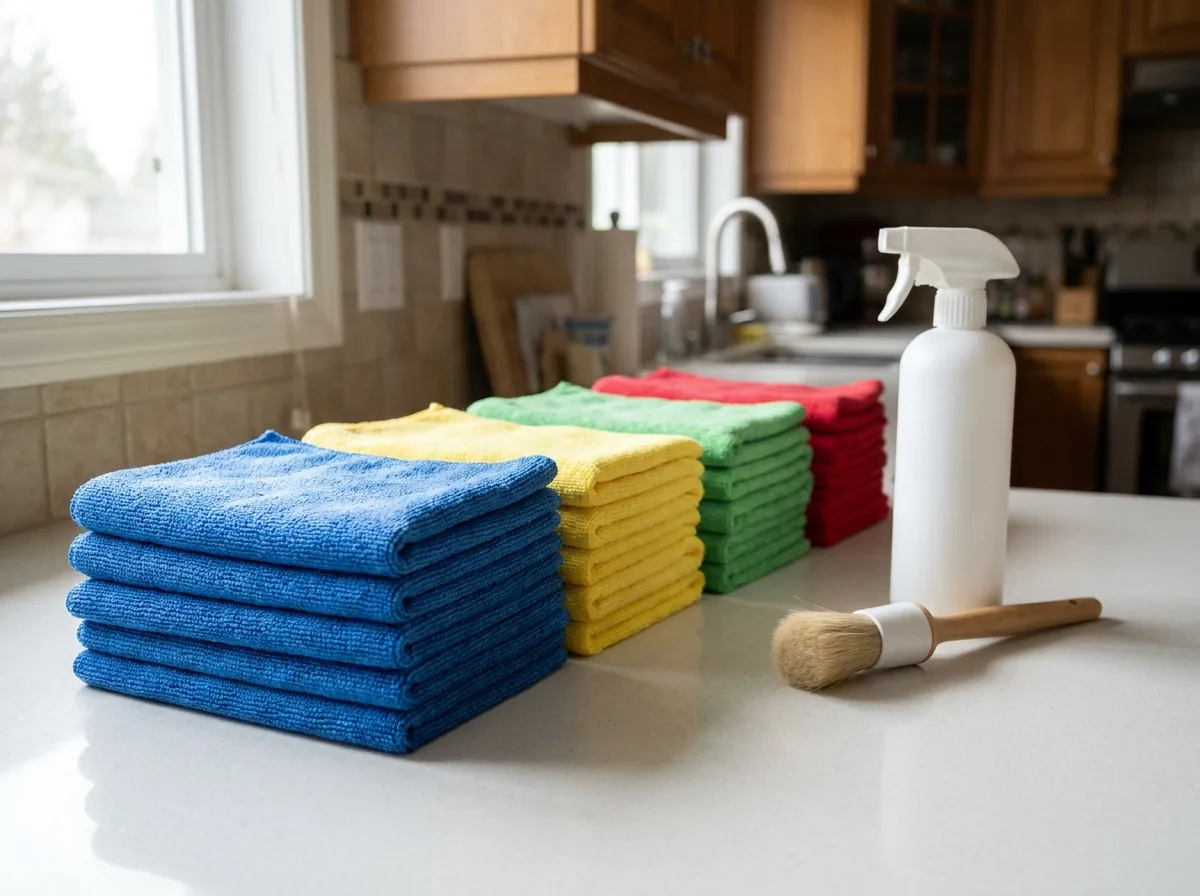
Two companies can quote the same hourly figure and not be selling the same thing. Ask what is inside it. Ours includes the products, the equipment, the cloths, the travel anywhere in the ten cities we serve, the insurance, and the vehicle that brings all of it. No supplies charge, no call-out fee, no fuel surcharge and no minimum booking.
If a quote is cheaper per hour but you are supplying the vacuum, or there is a call-out fee, or the travel is billed, you are not comparing two rates. You are comparing one rate with a rate plus a list.
In one line. Ask for the rate, the people and the hours as three separate numbers. If you get all three, hourly is almost always the cheaper and the safer model. If you only get a total, you are being asked to trust a figure you have not been allowed to check.
Check our arithmetic yourself
The three numbers, in writing
Four steps, a real time slot and a written total — usually the same day.
Hourly or flat rate: your questions
Is hourly or flat rate better for house cleaning?
Hourly is better for almost every home, provided you are given the hours in writing before anyone starts. A flat price has to cover the worst home the company might walk into, so everyone whose home is better than average is paying a risk premium they do not need. Hourly with no estimate of hours is the exception: that is not a price, it is an open tab. Ask for the rate, the number of cleaners and the expected hours as three separate numbers.
Why do some cleaning companies refuse to give an hourly rate?
Usually because the hourly figure would look high next to a competitor, or because the business model relies on finishing faster than the quote implies. Neither is necessarily dishonest, but it does mean you cannot check the arithmetic. A company that prices by hours can give you the breakdown in one message, because that is how it worked the number out in the first place.
Could an hourly job end up costing more than quoted?
Not with us. We confirm a written total before the visit based on the size and condition you describe, and that total does not change on the day. If we misjudged the hours, that is our error rather than a surcharge. The one case where the number moves is if the home is substantially different from what was described, and then we tell you what it would take and you decide before anything starts.
Does a flat rate ever make more sense?
Yes, when the job is genuinely identical every time, because then there is no risk to insure against and no premium to pay. The clearest case is a short-term rental turnover: same suite, same linens, same checklist, dozens of times a year. A small office cleaned nightly to a fixed scope is the same. A home is not that — your kitchen in March is not your kitchen in December.
What is included in your hourly rate?
Products, equipment, cloths, the vehicle that brings all of it, travel anywhere in the ten cities we serve, and the insurance. There is no supplies charge, no call-out fee, no fuel surcharge and no minimum booking. That matters when you compare two rates: if one is cheaper per hour but you are supplying the vacuum or the travel is billed, you are not comparing two rates, you are comparing a rate with a rate plus a list.
Does the hourly rate drop if my home is easy to clean?
The rate does not change, but the bill does, because the visit is shorter. That is the quiet advantage of hourly pricing on a recurring plan: a home that is kept clean takes less time every visit, so the invoice falls on its own. Under a flat rate nothing changes no matter how easy your home becomes.
How do I compare quotes from different cleaning companies?
Put them in the same units. Ask each one for the hourly rate per cleaner, how many cleaners they will send and how many hours they expect, then multiply. Then ask what is included, because that is where two identical-looking rates stop being identical. If a company will not break its number down, you cannot compare it with anything, which is usually the point.
Ask us to show the arithmetic
Rate, cleaners, hours and total — the four figures in one message, before you commit to anything.
Or call (604) 754-8039 — we answer the same day.